

This isn’t just a habit; it’s neurology in action.
1. The Brain’s Volume Knob (Baseline Arousal)
Inside your brain, a network called the Reticular Activating System (RAS) controls how alert you feel. Explore this important topic after you've familiarised yourself fully with this section. A link at the bottom of this page will take you there.
2. The Reward Chemicals (Dopamine vs. Acetylcholine)
Our brains rely on
different chemical rewards
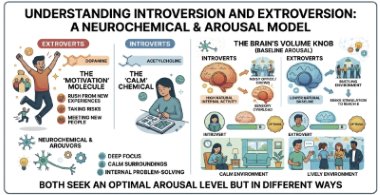 : 🡸 hover / click to learn more later
Because we live in a fast-paced world, most of us operate as Ambiverts by necessity.
An introverted delivery driver can choose to make extra deliveries when duty calls, and an extroverted collection driver can sit patiently in traffic when required. However, acting against your natural wiring costs you fuel.
Knowing whether you are primarily dropping off parcels or collecting them allows you to manage your daily schedule, protect your battery, and avoid burnout.

Have you ever met a teacher who shows confidence, is dynamic and commanding in the classroom, but quiet and reserved at home?
Or maybe an executive who thrives in high-stakes negotiations, but prefers a solitary weekend in the garden?
This is not a contradiction—it is a contextual shift.
We all have a "biological home base" (how our physical nervous system is wired) and "role demands" (what our professional roles or social obligations require).
For this reason, it is important to evaluate your energy levels by looking at how you feel after the task is over. Acting extroverted when you are naturally introverted (or vice versa) is a powerful skill, but it always comes with an energy cost.
Take a moment to find out your natural tendencies while considering your responses in different scenarios by taking our short evaluation.
The Reticular Activating System will interest the knowledge seeker because it eplains in simple terms what goes on in your brain – beneath the hood. If you are engaged, hit the first button.
The Hybrid Human is our Human Personality Chapter. You may follow the second link, below, to jump straight to the different personality types.