
DECODING PEOPLE'S BEHAVIOUR
Understanding human behaviour is not about putting people in boxes. It is rather about understanding under which template they are currently operating because according to this model, every individual is a "Hybrid"—a unique blend of four primary forces that shift as the environment changes. So there is NO fixed personality per se.
People are conditioned beings and human behaviour gravitates towards sets of programmed probabilities.
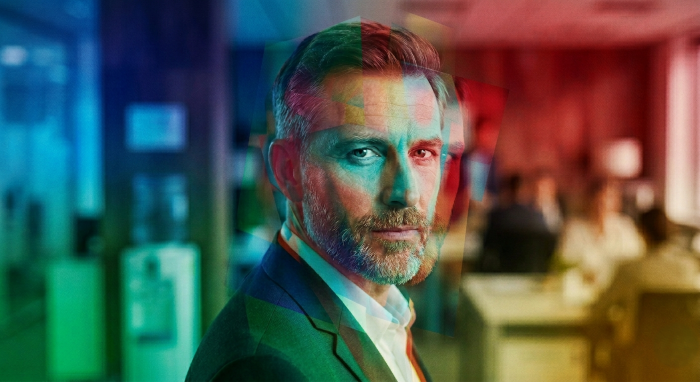
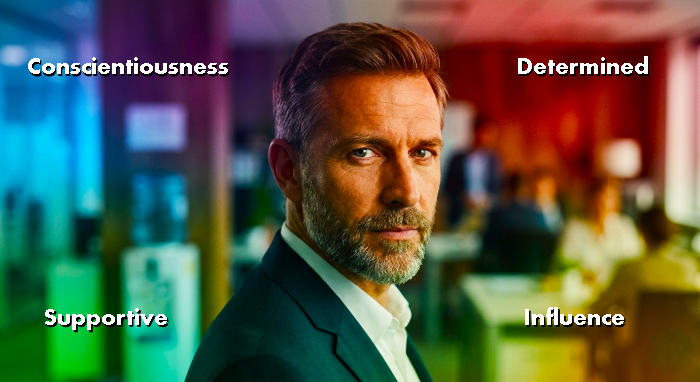
[ HOVER OVER THE PICTURE TO DECODE TEMPLATE ]
The DISC Model is a simple yet fascinating tool that teaches us how to identify, evaluate and understand behaviours – from which we can often predict people's likelyh moves and reactions once we understand what drives them. The secret is to observe, then observe some more, and calibrate your understanding.
There are other ways of assessing personality types and they usually rely on people's "traits" or "motivations," but in the DISC Model, while we talk about different personas, it is not actually people that we monitor, but their repeated behaviour! Here is an often overlooked yet a most essential insight:
People's behaviours often change in different circumstances, especially in different 'roles'. For instance, at work and at play we often behave as if we were different people; most of us behave differently in private circles. This means that Personality is not fixed; it is fluid. We are each a mix—or a hybrid—of the different "types" that the DISC Model groups into four quadrants, or divisions.Be sure to learn about the persona in the dedicated section.
The following is a rule of thumb – the main behaviours to look out for. A more detailed explanation is given in the next page.
The Sovereign behaviour focuses on: results and speed.
High Sovereigns have a direct communication style and are very demanding;
Medium Sovereigns decide quickly, but are calculating in their power moves.
The Orator behaviour focuses on: impact and enthusiasm.
High Orators are typically outgoing and the life of the party;
Medium Orators are naturally persuasive communicators who value social harmony.The Bedrock behaviour focuses on: stability and a steady pace.
High Bedrocks are fiercely loyal and steady, somewhat averse to change;
Medium Bedrocks are reliable anchors who prefer incremental change.The Architect behaviour focuses on: logic and data.
High Architects are perfectionists and attentive to detail;
Medium Architects are analytical thinkers who ensure the plan is sound.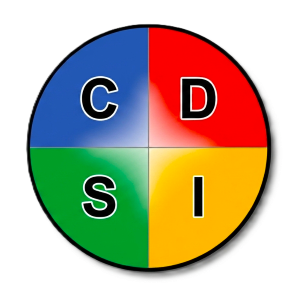
In the next section we look more closely at how a variety of behaviours from the four personality archetypes in this Model combine to form different versions—personas—of an individual. The greatest thing about this method is that it's easy to observe behaviour, so that, once you understand how each type operates, you should be able to gauge [and predict] the kind of language another person responds to, their inclination towards risk or away from it, what makes them energised or drained, whether emotion or rationale is their motivator, etc. And suddenly, it becomes clear!
For those who are less interested in specific information—and, of course, from this alone we already know which other characteristics you are likely to have—you might wish to jump to the area where we explain the DISC personalities in action via your favourite TV or movie characters, along with related quizzes. 🗝️ That said, we strongly recommend that you check out the next section first and match which of your colleagues fits which DISC type/s. You can always visit the entertainment arena later.