
3RULES
For Your Life
and Career
Rule 1: The 'BASIC' Rule
BE✧AHEAD▶STAY✧IN✧CONTROL
- Spot friction early and act before a moderate issue becomes a serious problem.
- A foreseeable problem? Deal with it before it becomes a problem! What you allow ... continues to Grow!
Rule 2: The Two-Minute Rule
In 2 minutes' time, you'll forget!
- Take note immediately. Memory plays games!
- New Idea? Capture it! Record it quickly, before it vanishes. Tip: Use your phone: Record a Voice Note.
Rule 3: The Panic Button Rule
When you feel overwhelmed
▶Slow Down.
- Tip: To keep Calm .. slow your 'physical' tempo and you'll regain 'psychological' control.
- Stop .. then Respond—don’t react. Response is deliberate. Reaction is automatic.
3 Rules for Your
Life and Career
Your Smart Action Toolkit
So much of what we do in daily life is conditioned behaviour. We go through our routines, attend meetings, and manage relationships on autopilot.
Sometimes—in hindsight—we look back and regret our actions. We find ourselves wishing we had said something else, handled a conflict differently, or simply not reacted at all!
The good news? You do not have to be a victim of your automatic loops. Here are 3 practical, actionable rules that apply equally well to the workplace and to your private life.
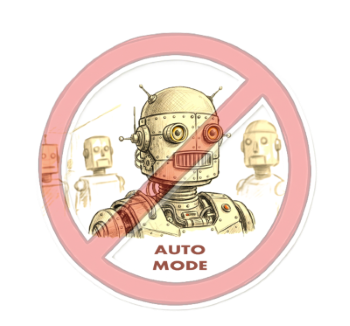
These rules are essential because they break the automatic loop and give you the strategic space to respond appropriately and effectively.
Our ultimate objective is to engrave these actions as deliberate habits—conditioning your mind and career not by accident, but by design.
Rule 1: The 'BASIC' Rule
Be
Ahead —
Stay
In
Control
In a nutshell, this rule is all about proper timing and proactive framing. It is about pre-empting a negative event as well as planning a positive one, rather than leaving things until the final moment.
Now, some people claim they perform better when they face a deadline from a metre away. Good luck if you are that sort of person! But let’s be honest: speed and accuracy are rarely best friends.
- If an opportunity is spotted: Go for it. Do not sit back and wait for it to come to you. Wait only IF the wait is strategic.
- If a problem is spotted: Deal with it in its infancy. Don't let a minor "issue" escalate into a "problem," and never let a "problem" grow into a full-blown "catastrophe."

In his exceptional book, “If It Ain't Broke ... Break It!” Robert J. Kriegel explains that the surfer, besides paying attention to the wave that's closest to him—the one he’s intending to ride—also looks farther out into the ocean for better waves. He also explains that if you wait too long, a big wave will wash over you and leave you struggling in its wake.
The best action is pro-action ▶ go out to meet it (as early as good timing permits).
The best defence is offence: deal with it ... before it happens.

"The wise man acts at the beginning; the fool acts only at the end. Do not let trouble grow to a head, for what is easily turned aside at first becomes an unmanageable crisis later."
If you wait too long to make a move, the wave of a crisis will simply wash over you, leaving you struggling in its wake.
Preparation is your ammunition; foresight is your advantage.
Be aware. • Be proactive. • Be Ahead, so you can Stay In Control.
Rule 2: The Two-Minute Rule
In 2 minutes' time, You will Forget!
There is no complex theory to explain here. This rule is a brutal reminder of a simple truth we often forget or deny: your working memory is fragile.
A brilliant brainwave comes and goes in a single flash. If you record it immediately, it is yours forever. If you assume you will remember it later, it is already lost. So, what if you get a magnificent idea while you're in the shower? Don’t risk waiting until you dry off. You will lose it! I reach for the phone and record a quick voice note—immediately.
Don't rely on your brain as a storage unit — Human memory loves to play games with us.
"Carpe diem."
Engl: 'Harvest the moment; seize the day.'
We often flatter ourselves into believing that a great idea is too profound to ever be forgotten. That is a costly illusion. Within minutes, a passing conversation, an email alert, or a minor distraction will overwrite that mental chalkboard entirely.
When inspiration hits or a crucial adjustment displays itself, take immediate custody of it. Write it down, record a quick voice snippet, or log it into your workflow execution track right away.
Ideas are fleeting mental capital. When a creative spark, a strategy, or a critical observation flashes across your mind, it operates on an incredibly volatile shelf-life.

By capturing the opportunity immediately, you secure raw material that can be analyzed, refined, and deployed strategically when you are completely outside the immediate rush of the day; otherwise it vanishes into the background noise of daily operations.
Harvest the opportunity before it evaporates. Stop leaving your intellectual property to chance.
Rule 3: The Panic Button Rule
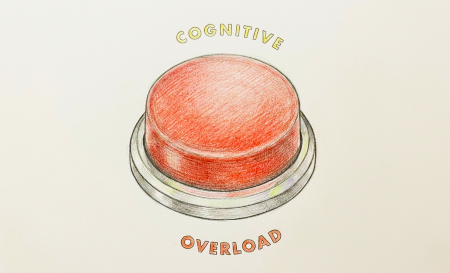
When You're Overwhelmed ... Slow Down
Notice that this rule specifies a physical action rather than a psychological one. Why? Because it is far easier to intentionally 'slow down' your body than it is to force your mind to 'calm down' your mind. The mind controls the body, but the physical body also greatly influences the mind.
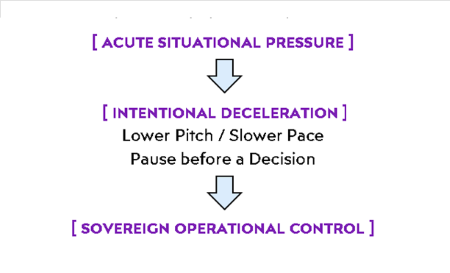
In the DISC Behavioural Model, this corresponds directly with a deliberate "C" (Conscientious/Blue) tempo. It is slower, analytical, and measured rather than automatic and hasty. It is the power of responding rather than reacting.
"When angry, count ten before you speak;
if very angry, an hundred."
Overwhelmed?
Whether you're angry, or overwhelmed, 'The Panic Button Rule' is the tactical pause you take when you feel triggered—your frustration rising. It is the "second of strategic hesitation" before you do the predictable, defensive thing. It forces you to look directly at the threat rather than blindly rushing into the fire.


The Executive Audit
Take a few minutes today to look back at your recent track record. Think of a couple of situations where these 3 rules could have saved you time, money, or stress:
- Can you remember a time you struggled to recall a catchy phrase you could have used in your marketing?
- Are you forever wishing you had acted when a problem would have cost you a pittance, instead of putting off a decision until the nestling became a dangerous eagle?
- Do you have any lingering regrets about being too hasty or defensive when provoked in a high-stakes environment?
Stop leaving your professional presence to chance.
Apply these tactics especially if they don't come easy to you! Use the 'BASIC' Rule, capture your ideas, and hit that "kill-the-panic" button to slow down the room, so you can lead by design rather than by instinct alone. If you found these practical and useful, think of someone you know who might need to apply them too.
Expanded Reading & Resources
- Exploring our Shifting Personalities: Unlocking the Hybrid Human Blueprint: A Guide to Strategic Adaptability within shifting personalities
- Visit our Archive Vault: Access the Complete Gladiator Training Mind Skills Library
- Recommended Book: Change your business perspective with unconventional wisdom. Pick up Robert J. Kriegel's exceptional masterwork, If It Ain't Broke... BREAK IT!