
MEMBERS ONLY CONTENT
introduction
In previous parts we went over The Big 5 universal traits, vector by vector, explaining what the high and low scores indicate.
It is important to remember that the more traits we identify in ourselves within a particular vector, the higher our score will be, which places us as a 'typical' candidate in that category. On the other hand, a low score would mean we are likely to be in the opposite (unnamed) category of that same vector.
The simplest example of this is the "Extroversion" vector where a low score would indicate higher 'Introversion' tendencies although this label is not mentioned in the trait title. Remember, neither is better; they are simply different.
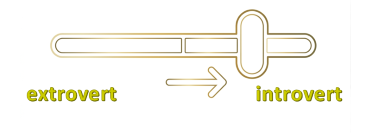
We mentioned that, not only are we generally somewhere along the sliding-scale, in between the two extremes, but that we also shift—sometimes radically—within that spectrum. This would change our behaviour and attitudes; our "type," you might say. For example a 'natural' introvert might operate as an 'adaptive' extrovert at work.
For the puspose of this section, we must presume that you have already gone through the recommended pages, so that you have a fairly good understanding of both "introversion and extroversion" and the "Jungian persona" material we provided.
A critical flaw in traditional psychometric testing is the assumption that personality is permanently tattooed in a person's mind. Many people still believe it to be a 'fixed' list of characteristics that describes a person whereas, in reality, human beings are more like dynamic chameleons than framed portraits.
It is normal for our behaviour to change according to our environment and the biggest reason for this is our human evolutionary development.
In our human nature
 Understanding what drives behaviour is crucial in order to navigate relationships more consciously and beneficially.
This resource, deals with the brain's hardwired programming, suggesting that "humans" are a product of genetics combined with evolutionary and environmental conditioning, where our decisions are more 'algorithm' than conscious 'will' and Personality is only one of several layers of 'conditioning'.
blueprint we are driven by an unconscious 'adaptation' strategy rooted in our fundamental need for survival.
In Carl Jung’s concept of the persona—the 'social mask' or 'adaptive identity' that we put on to deal with different environments—a person’s behavioural expression shifts multiple times throughout a single day, and across different contexts within a week.
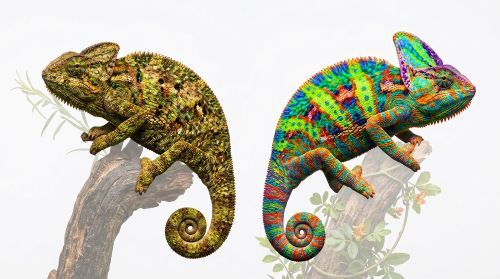
Let's illustrate this: An individual might dial up their Conscientiousness and suppress their Extroversion when drafting quarterly financial reports behind closed doors, only to invert those settings entirely when stepping onto the Conference floor to deliver an energetic keynote address an hour later. Your 'work persona' is therefore a bespoke composite vector tailored to meet the demands of the immediate operational theatre.
Here is a profound insight: We shift even inside the same 'persona'. Your 'work' persona, your 'parent' or 'social' personas, they too aren't rigid.
This is a recap of points to remember before we move forward:
In the next stage we examine how the Big 5 profiles are composed and what they look like in different contexts, i.e. as separate 'personas'.