Soft Skills are particular abilities that should give you an advantage in your interpersonal relationships—i.e. when dealing with other people—and these advantages relate principally to people's behaviour and communication skills.
Since it's not easy to define the 'soft' nature, it is perhaps easier if we started by describing what Soft Skills are not.
The obvious first answer is that they aren't Hard Skills, and the easiest way to describe hard skills would be as 'subjects' that a person learns either at school or on the job—such as Finance, Building, Information Technology, Welding, Engineering, Drawing, Law, Project Management, etc. You could almost equate these [measurable] hard skills with "department names," or something that could be in your job title. So next ...
Here is a list of important skills you can learn, or improve, to give yourself higher value in your organization, and even in your private life. There is no particular order to this list.
-
Leadership
Anyone can be a leader, although not everyone wants to be one. Still, remember that leaders exist at different levels and in different kinds of organizations; from being a parent to becoming prime minister. There are different "types" of leaders too, depending on one's personality and preference towards leadership style.
Require Leadership Training?
Whether you wish to train your executives, or management, we can discuss your needs and tailor sessions in case our Training Modules might not be exactly what you need. Logistics, duration, and content are flexible issues.
Email or call Steve on +356 999 8765 2 to make it happen.
BACK to the Main List

-
Teamwork — Team-building
Once you understand Personality Types you will immediately understand that Teamwork comes more naturally to some people than it does to others. It is a 'collectivist' attitude rather than a 'competitive' one. But, as we explain in the Persona chapter, the best results don't necessarily come from one's Natural self; and learning how to foster collaboration within a team is a skill that will invariably bring better outcomes than individualism will.
Team Building, meanwhile, is a primary responsibility of the Leaders in any team, big or small. Team members may be compared to the trees in a garden—providing shade and shelter to one another depending on each one's strengths and needs—while the leader is like the gardener, responsible for doing what's necessary to create the right climate.
➽ Teamwork — to follow
BACK to the Main List

-
Effective Communication
While we all communicate, few of us are born naturally good at it—the rest have either had to learn how to come across effectively (enough to get results), while the rest are still flipping coins and doing guesswork! Those who know, appreciate that it involves much more than saying the right words, although those matter too, but so much more!
Criticism / Feedback is perhaps the most difficult topic in communicating, especially – but not only – where different cultures
In some countries, people seem to be less sensitive when expressing disagreement while in others you hardly realise that people totally disagree with your point of view. This isn't about being rude, although people from different cultures might interpret it that way.
The former is simply a communication style that does not beat about the bush, yet this is often a common cause of hostility, bad feelings, and conflict between people of different cultures, or mentality. — Learn about cultural diversity via GladiatorTraining.biz.
are involved. Some people are straightforward, direct and brutally honest, while others prefer to sugar-coat negative feedback, fearing they might sound offensive. Again, if you have covered Personality Types you will immediately figure this out. It's not about being insensitive or insincere, but about choosing the right way to get your meaning across without risking misunderstanding.
Avoiding Conflict is, of course, closely related. In the previous point, we seek to avoid misunderstanding while here we learn about people's most basic needs that form both the foundations and the building blocks of any healthy relationship.
Require Communication Training?
We've trained all levels—from truck drivers to HR managers. The problem in a lot of companies is often simple, but not an easy one to solve: ground troops and leaders don't have the same awareness and experiences; each believing they are right and thinking the others are useless!
In our training, we help the team understand that "half a vehicle can't do the job!" By teaching effective communication, conflict avoidance, rapport building; and the right way to speak, training often irons out an otherwise uneasy relationship that creates friction!
Email or call Steve on +356 999 8765 2 to make it happen.
BACK to the Main List

- The Art of Persuasion
This is a specialised topic that falls under the broader domain of communication. Actually, when we communicate with another it is often one of our unconscious objectives—to convince them to agree, or to do something we wish them to do.
There are different ways to persuade, and we often do it without even thinking about it. We shall examine this art that spans across the spoken and the non-verbal, the written and the performed. As may be expected, our inner circle gets a comprehensive dossier with priceless tactics.
➽ The Art of Persuasion — to follow
BACK to the Main List
- Making Presentations
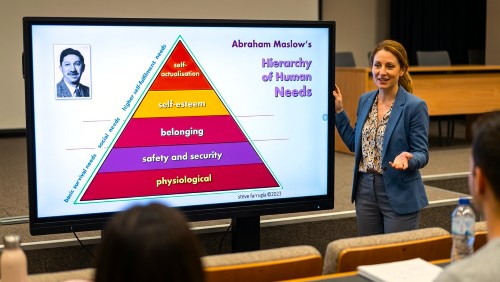
Have you even had the misfortune to sit through a boring. data-heavy PowerPoint presentation, with screens full of [tiny, illegible] text ... and tables, which are read out to the audience by a stiff presenter? So many of these so-called professional presentations are nightmares. Ineffective, to say the least. Bad publicity at best.
'Making Presentations' Training?
Whether you're in corporate, or in education, presenting to the Board, or in a lecture room, you need to be effective, to hold their interest, and keep your material relevant and memorable.
This is a short course, spanning 2 to 3 sessions, with practical deliveries and feedback. For those involved in delivering Talks, the Public Speaking course is a more thorough programme, but if one is involved in small group delivery, then this is the one.
Email or call Steve on +356 999 8765 2 to make it happen.
BACK to the Main List

- Speaking in Public
When you need to stand and deliver a Talk, even if you happen to be an expert in your field, you need to come across as someone who is delivering a Gift. The last thing you want is to embarrass yourself in front of your public—the people who came to listen to you, hoping to learn, or be entertained, or both; edutainment.
So you want to appear confident and to leave an impact. You might not aspire to be a JFK, or an Obama, but you still hope to impress your message clearly and memorably on your audience. To do this, you'll need to speak the right words, in the right way, and use the right gestures; all while remaining calm—despite the jitters. As you can expect, speaking in public also requires "rhetorical devices," or language tricks, that push your message and pull their attention. If you are interested in Training sessions, we'd like to hear from you.
➽ Public Speaking — to follow
BACK to the Main List

- Negotiating
WE all negotiate; every single one of us! It might not be obvious because our behaviour while doing it isn't always as we would describe "negotiation".
Very often, we expect negotiation to be aggressive, or cunning, or necessarily about high-stakes matters. But while it can be all those things, it isn't only those things! It can, and should, actually be pleasant.
Why, then, should we learn how to negotiate professionally? Because people exist who are hungry for all the benefits and who are willing to leave you stranded with a loss!
➽ Visit the Negotiation page
BACK to the Main List

- Time Management?
Although the term is actually incorrect, we keep using it. So let's call it "Prioritising Tasks" here because that's exactly what it is.
The tools and explanations that follow in this learning platform, are titled as Higher Productivity, which is the goal of the so-called Time Management techniques that we explain. When it comes to improving your workflow, even applying one single tactic should improve your output. Just imagine using a bunch of them as your newly installed, upgraded habits!
➽ Visit the Higher Productivity page
BACK to the Main List
- Motivation
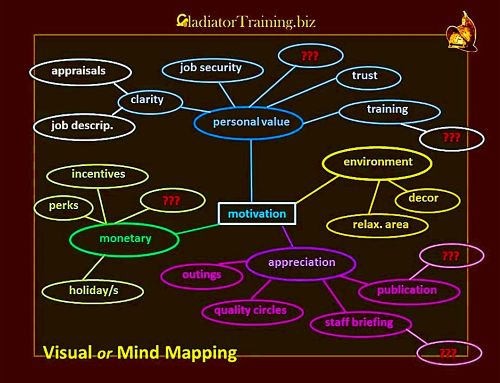
Motivation is the core 'why' behind every human decision, which is driven by a spectrum of forces. These include: our primitive survival instincts, our need for status, unmet emotional needs, and—much less likely—pure logic.
For your message to resonate (to feel right) with another person, it needs to address those 'motives' as well as what that person values most and the core beliefs they hold as absolute truths about reality. It is important for you to know what motivates Humans in general, and even more so to decode what will drive that particular person—the key that will open their lock.
➽ Motivation page — to follow
BACK to the Main List